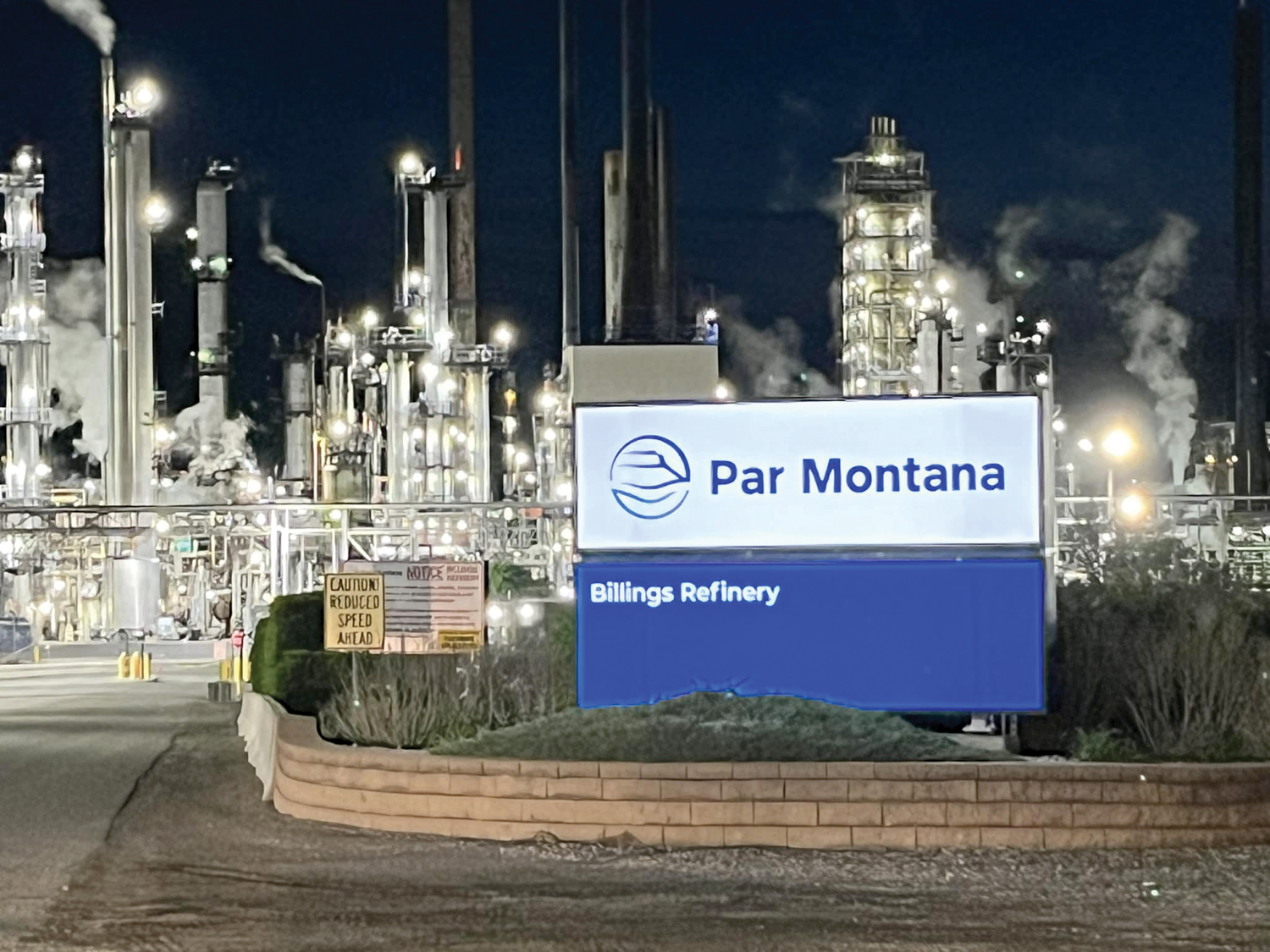


Billings, MT


American Exceptionalism.
It’s not about politics.
It’s not about nationalism.
It’s really not even about America.
It’s about human beings and how they were meant to live.
Read the Full StoryBy Evelyn Pyburn
With extensive experience in business and most especially in the campground business, there are few people better qualified to advise prospective campground buyers than John Halstvedt and Dan Singer. Recognizing a need and understanding the unique means they have of addressing that need, these two Billings men have started a new enterprise – Recreational Business Partners.
Read the Full StoryChange the Game will be the focus of the 2010 Compete Smart Manufacturing Conference. Meet company leaders in person, tour and explore new possibilities with your peers and allies on October 7 & 8 in Billings.
Read the Full StoryPredictions about Montana’ s economy had to be adjusted by the experts at least three times last year, so volatile and unusual were the events that unfolded in 2008. “By now it’s obvious that the recession is not going to be short and mild,” said economist Paul Polzin, and it’s just as obvious that it isn’t going to miss Montana, as it did twice before.
Montana will be lucky if it can maintain a flat growth rate in 2009, predicted Polzin in speaking to attendees of the 34th Annual Economic Outlook Seminar earlier this month. An optimistic scenario is that the state’s economy will grow at a half a percent, considerably less than the robust growth rates of 3, 4 and sometimes 5 percent of recent past years. It will be the worst year the state has experienced since 1988, but Polzin predicted that the state will touch bottom by mid-summer.
The state enjoyed a 2.5 percent rate of growth in 2008.
“There’s a 50-50 chance the growth rate could be a minus half percent or even a minus one percent,” he added. What happens in Montana will largely depend on the price of commodities and how severely businesses will have to layoff. “There is some evidence that commodities have already reached the bottom,” said Polzin, “so layoffs may not happen.”
Commodity prices are determined by worldwide conditions and fast growth is happening in developing countries like China, India and Taiwan. “Developing countries are different than the US, they are more oriented to manufacturing so they use great quantities of energy and commodities, “so long term we are optimistic about those conditions,” said Polzin.
While Yellowstone County also avoided the last two recessions, it’s probably not going to miss out on this one. In fact, the county faces the possibility of getting “a double whammy,” said Polzin. Yellowstone County being a central retail and wholesale trade hub will feel the impact of what Polzin said is an “all time low” consumer price index in the state. In addition, serving as it does the eastern region with the headquarters of energy and mining companies located in Billings, any declines in those industries will indirectly have an impact on the local economy.
The prospect of those possibilities were not, however, calculated into Polzin’s prediction that Yellowstone County will suffer a minus 0.3 percent growth rate in 2009 – about the same as what the figures will likely show to be the growth rate in 2008 for the county.
The growth rate predicted for Yellowstone County was the second worse of the urban counties predicted by Polzin – exceeded only by a predicted minus .6 percent in Gallatin County. Lewis and Clark County with a predicted growth rate of 2.5 percent was the highest county, followed by Cascade County with 1.7 percent, Missoula and Ravalli at 1.5 percent, Flathead at .7 percent, and then Butte-Silver Bow at minus .1 percent.
Yellowstone County is predicted to have a substantial recovery in 2010 of 2.6 percent. “Billings has been losing a little bit of its role as a trade center in eastern Montana to Miles City and Bozeman,” explained Polzin, “so it will experience a slower rebound.”
In speaking of the situation nationally, Polzin pointed out that while this may be the worse economic times since the Great Depression, it is not as bad as the Great Depression when unemployment reached level of 15 and 25 percent and remained at those levels for many years.
The current recession is more of an intermediate recession, he said, defined at unemployment level of 8-10 percent.
The blows to the state’s economy are coming from closures and shutdowns in the wood products industry, the plummeting of construction activity and the stalling of the real estate market; the announced losing of Columbia Falls Aluminum Company; wheat prices plummeting; plunging metal prices; announced layoffs in the “high tech” and other manufacturing sectors; and an all-time-low consumer price index.
Asked whether consumer sentiment isn’t being driven more by negative news reports than a realistic assessment of market conditions, Polzin responded, “Montana consumers are smarter than that. They take national news for what it’s worth. There are very good reasons for sentiment to be low.”


![]() |
|
![]() |
|